The booking decision starts before the first message
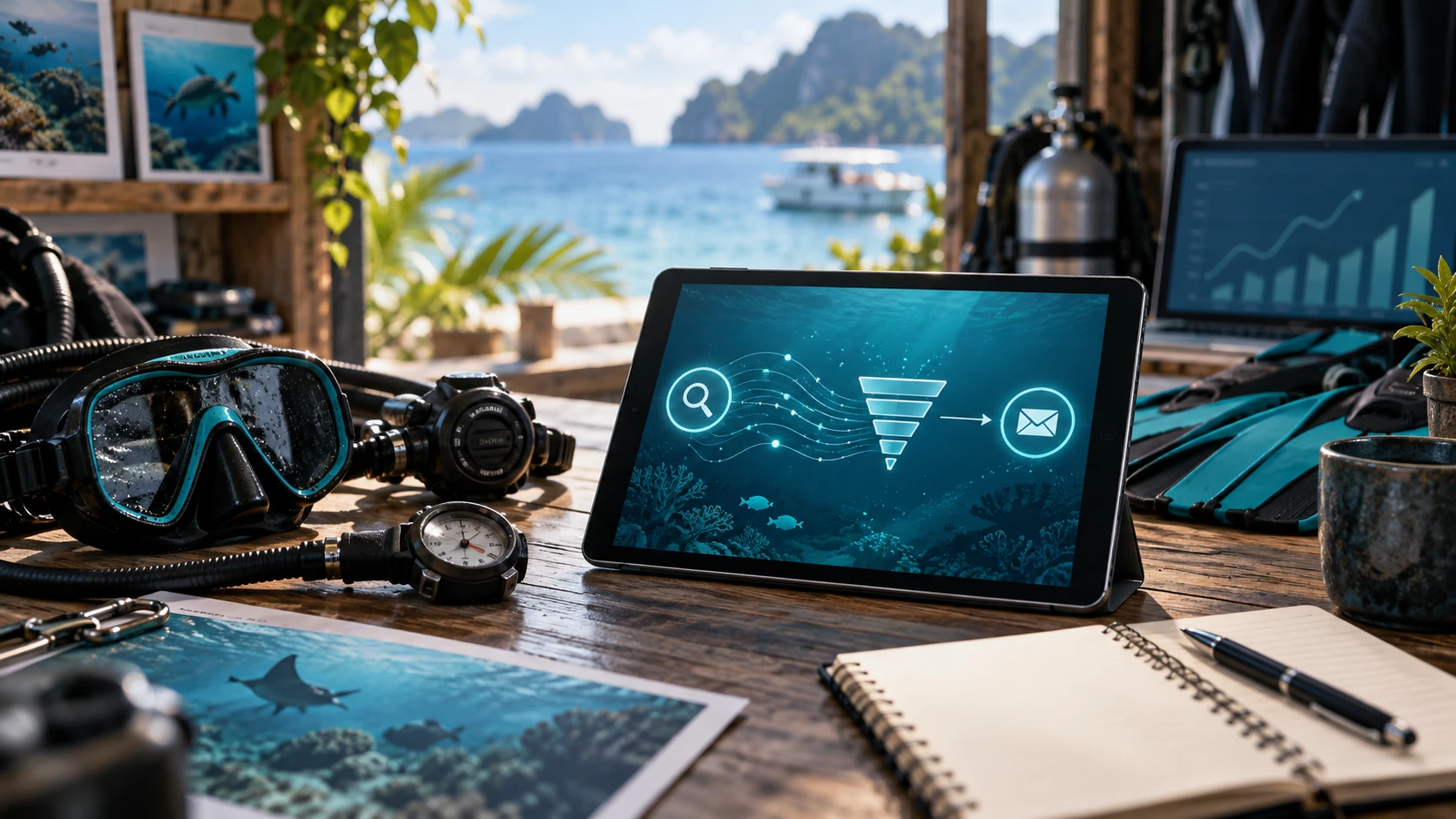
A diver rarely wakes up and chooses the first dive center they see. They search on Google, scan Maps, compare reviews, open websites, and often message more than one operator.
That means the real competition is not only underwater. It happens in the small moments before a guest books:
- Which dive center appears when the guest searches?
- Which listing looks current and trustworthy?
- Which website explains the offer clearly?
- Which team replies first with a useful answer?
For many dive centers, this is where bookings are won or lost.
The guest compares four signals
The first signal is visibility. If your center does not appear for the right searches, you are not in the shortlist.
The second signal is trust. Reviews, photos, opening information, instructor language, safety cues, and a real sense of place all matter.
The third signal is clarity. A guest wants to know what is included, which certification level is needed, what happens with equipment, how pickup works, and whether the schedule fits their trip.
The fourth signal is response speed. If three dive centers look similar and one sends a clear answer in minutes, that center feels easier to book.
Why slow replies hurt good operators
Dive teams are busy for good reasons. They teach, guide, prepare boats, fill tanks, check equipment, and handle guests in person. The problem is that the guest does not see that operational load.
They only see whether their message was answered.
A late reply can make a strong dive center look less reliable than it really is. An incomplete reply can force the guest to ask again. A generic reply can make a premium team feel interchangeable.
Where DiveOS fits
DiveOS is built around the gap between visibility and operations.
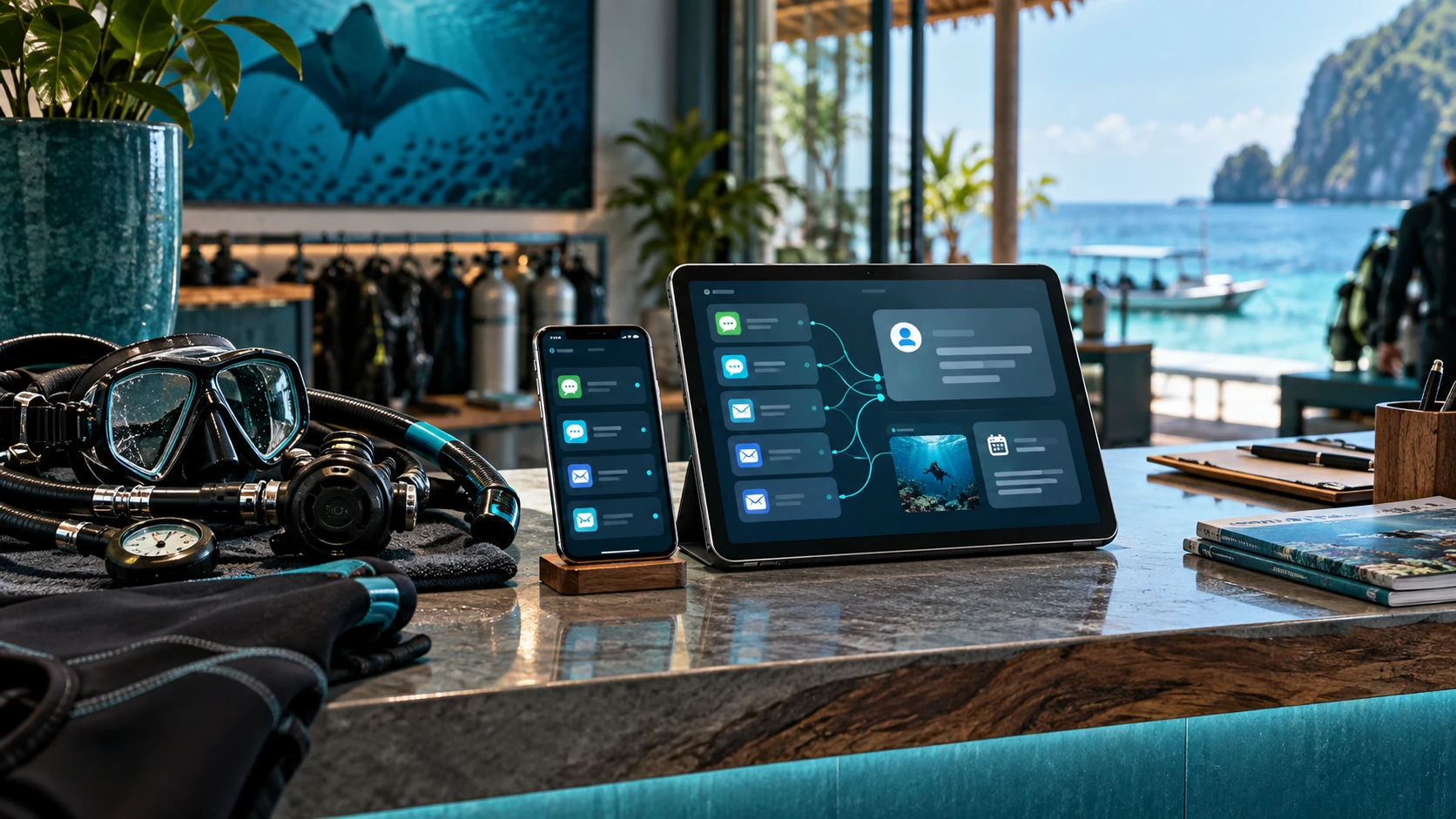
Growth work helps the right divers find the center through search, Maps, content, and campaigns. The inquiry operations then helps the team process the enquiries that arrive from that visibility.
The point is not to let AI run the conversation alone. DiveOS prepares:
- the guest’s intent
- missing details
- useful follow-up questions
- a reply draft
- internal notes for the team
The team reviews everything before anything is sent.
What to fix first
Start with the shortlist experience:
- Make sure your Google Business Profile is accurate.
- Make your website answer the most common pre-booking questions.
- Show who the offer is for: beginner, certified diver, family, resort guest, liveaboard guest.
- Make contact options obvious.
- Create a workflow for fast, consistent replies.
The fastest dive center is not always the best dive center. But the best dive center still needs to answer before the lead goes cold.
Answer Block
Divers choose a dive center by comparing visibility, trust, clarity, and response speed. A strong operator can still lose the enquiry if the Google listing is unclear, the website leaves basic questions open, or the first reply arrives too late.
Problem from a dive school perspective
A dive school is often busy exactly when new guests are searching and messaging. From the guest perspective, they only see whether another center looked more reliable and replied faster.
Practical example
A certified diver searches for two morning fun dives, opens Maps, compares reviews, scans three websites, and writes to four centers on WhatsApp. The center that answers with schedule, pickup detail, equipment question, and a friendly next step is more likely to win.
Concrete actions
- Keep Google Business Profile information current.
- Make trip, course, equipment, certification, and pickup details easy to find.
- Add clear contact paths on every important page.
- Prepare repeatable reply patterns for common enquiries.
- Create repeatable checklists for missing details and reply patterns, with qualified team review before sending.
Further reading: AI for Dive Center Enquiries: What to Automate and What to Keep Human.
Checklist
- Google listing is accurate and current.
- Reviews and photos support trust.
- Website explains the most common booking questions.
- Contact options are obvious.
- WhatsApp and email enquiries go into one reviewable workflow.
- No AI reply is sent without team approval.
FAQ
The structured FAQ for this draft is defined in the frontmatter. Keep body answers and frontmatter answers aligned before publishing.
CTA
Want to see where your dive center loses enquiries? Book a DiveOS Demo or Visibility Check.
FAQ
What matters most when divers compare dive centers?
Most guests look at Google visibility, Maps presence, reviews, website clarity, trip details, and how quickly the team replies.
Can response speed influence bookings?
Yes. When several dive centers look similar, the center that answers clearly and quickly often wins the enquiry.