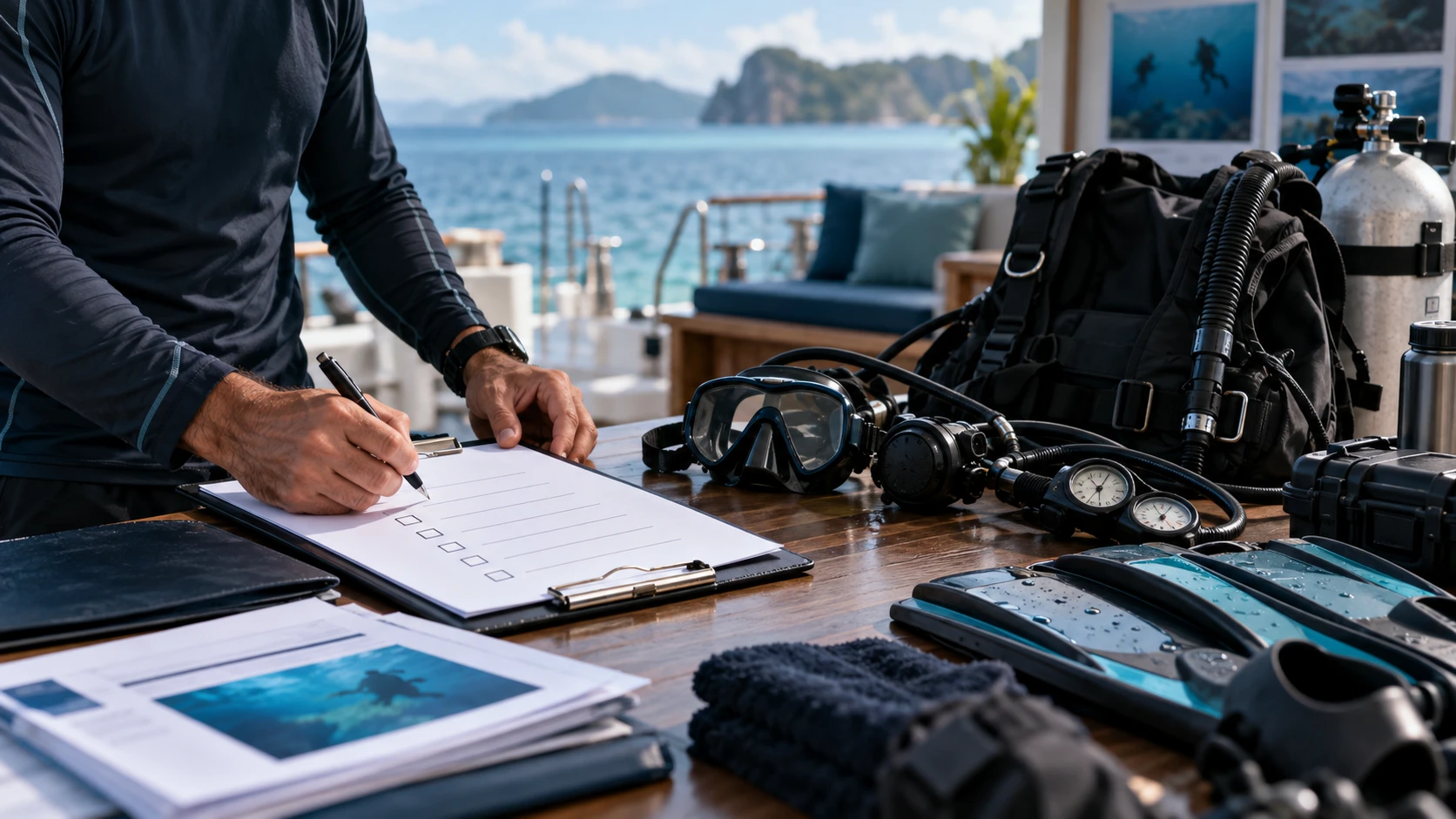
A destination page can help a dive center appear when travelers search for diving in a specific place. But creating a page for every nearby island, reef, town, or country is not a strategy. It often produces thin pages that repeat the same text.
This checklist helps dive center owners decide which destination searches deserve a useful page, what that page should contain, and how to measure whether it supports real enquiries.
What does destination intent mean?
Destination intent is a practical way to describe what a person wants when a place is part of the search. It is not an official Google ranking factor.
For example, these searches may look similar but represent different needs:
- “diving in Tenerife”: the person may still be comparing destinations.
- “beginner diving course Tenerife”: the person is looking for a specific product.
- “dive center near Los Cristianos”: the person may already be on the island and ready to contact an operator.
- “best time to dive Tenerife”: the person needs planning information before choosing dates.
Your page should answer one clear need. It should not try to rank for every possible search at once.
Step 1: Start with the product you really sell
Write down the real offer before choosing a keyword. Is it a beginner course, guided shore diving, boat trips, technical diving, equipment rental, or a complete dive holiday?
Then ask four simple questions:
- Can a guest actually book this product?
- Does your team serve this destination?
- Can you explain why your offer is useful there?
- Can you keep prices, schedules, access details, and seasonal information current?
If the answer is no, do not create the page. Never imply that you operate in a place where you have no real presence or service.
Step 2: Identify the decision behind the search
A useful destination page helps the visitor make one decision. Common decisions include:
- Is this destination suitable for my experience level?
- Which course or trip fits my holiday dates?
- How do I reach the dive center or departure point?
- What is included and what does it cost?
- What should I bring?
- How do I ask a question or reserve a place?
If two searches lead to the same decision and the same offer, they usually do not need two separate pages.
Step 3: Check whether people already find you
Google Search Console can show the searches that already create impressions for your website. An impression means that a page from your website appeared in a Google result. A click means that someone selected it.
Look for place names combined with products, such as “diving course”, “guided dives”, “liveaboard”, or “dive center”. Do not judge a topic from one number alone. Check the query, the landing page, the country, and the time period together.
If Search Console has little data, you can inspect the current search results and use Google Keyword Planner as an additional estimate. Keyword Planner is an advertising tool, so its numbers are not a guarantee of organic search demand.
Step 4: Choose the right page type
Create a dedicated destination page only when the location changes the offer or the visitor’s decision. A dedicated page can make sense when it needs unique information about access, dive conditions, meeting points, suitable certifications, available products, or booking steps.
Add a section to an existing service page when the destination is only a small detail. Choose no new page when you cannot add reliable, useful information beyond a place name.
This is the simplest protection against thin location pages.
Step 5: Build the page around verified information
A strong destination page should make the next step easy. Depending on the offer, include:
- who the activity is for;
- required experience or certification;
- what the guest receives;
- duration, meeting point, and transport information;
- price or a clear way to request it;
- current operational or seasonal limitations;
- real photos from the operator or destination;
- a clear enquiry or booking action.
Avoid generic paragraphs about sunshine, crystal-clear water, or unforgettable adventures. Visitors need information that helps them choose.
Step 6: Connect the page to the rest of the website
Google and visitors need clear paths to the new page. Link to it from relevant course, trip, destination, and planning pages using descriptive words.
For the wider approach, read our SEO guide for dive centers. If local discovery is the main goal, use the Google Business Profile checklist.
Step 7: Measure enquiries, not only rankings
A ranking is useful only when the page reaches the right people and helps them act. Review these signals every month:
- impressions and clicks from relevant destination searches;
- the countries and devices of visitors;
- enquiry-form starts and completed enquiries;
- clicks on phone, WhatsApp, email, or booking links;
- qualified leads that match the destination and product.
Do not claim that one page caused a booking unless your measurement supports that conclusion. Season, price, availability, reviews, competition, and the booking process can all affect the result.
Final go-or-no-go checklist
- The destination is part of a real offer.
- The page answers one clear visitor decision.
- The content is substantially different from existing pages.
- Operational claims can be verified and maintained.
- The page has useful internal links.
- The visitor can understand the next step immediately.
- Search visibility and qualified enquiries can be measured.
If several answers are no, improve an existing page instead of creating a new one.
The simple rule
Create a destination page when it makes a real dive product easier to understand and book. Do not create it merely because a place name might be a keyword.
If you want help choosing the destination pages with the strongest business case, explore SEO for dive centers.